
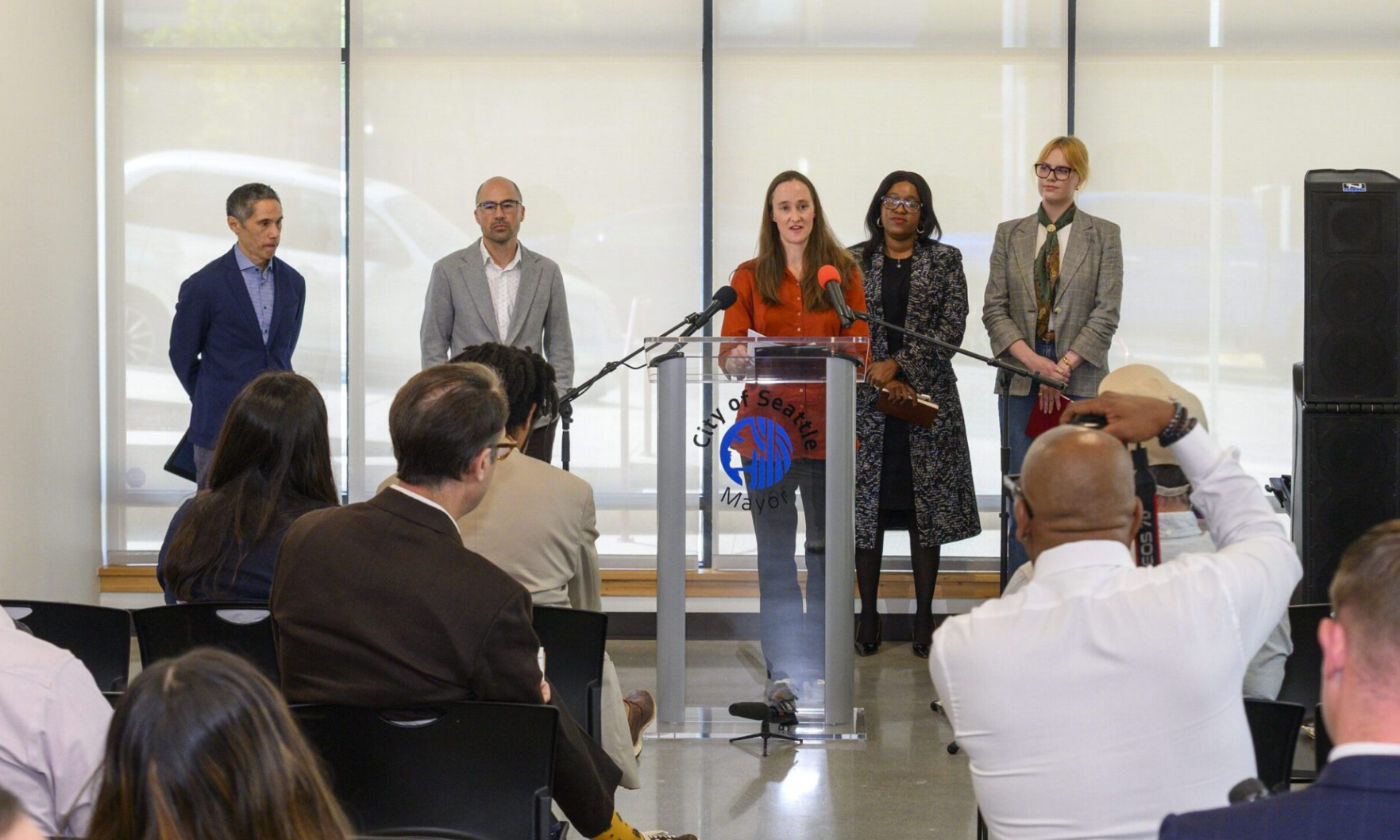
Seattle Mayor Katie Wilson signed an executive order that aims to accelerate housing production in the city — particularly affordable and market-rate housing.
Specifically, the order cuts red tape around building permits, launches a new housing production task force and advances active efforts currently underway in Seattle.
“Housing that people can afford is critical to a city that works for everyone,” Wilson said. “We can’t control every force that drives up the cost of building homes, but we can act where it counts. This executive order is about clearing the path, cutting the delays and building the housing Seattle needs — now.”
Accelerated permitting actions
Wilson’s executive order includes four measures intended to “make permitting faster and more predictable,” according to the Office of the Mayor:
- Assistance from the Seattle Department of Construction and Inspections for low-income housing developers.
- Designated points of contact for Seattle City Light, the Seattle Department of Transportation, the Seattle Fire Department and Seattle Public Utilities.
- Additional funding for an Affordable Housing Ombuds in the upcoming city budget.
- A new Residential Permitting Interdepartmental Team to improve cross-departmental processes.
Housing Production Task Force
As part of a joint effort between the Mayor’s Office, the Office of Planning and Community Development and SDCI, Wilson’s order creates a new Housing Production Task Force comprised of labor representatives, affordable and market-rate housing providers and community organizations.
Co-chairs include Seattle City Councilmember Eddie Lin; Tiffany Kelly-Gray, director of strategic initiatives for Byrd Barr Place; Carter Nelson, director of government affairs for the Commercial Real Estate Development Association; and Joel Ing, principal of Edge Developers.
“I’m honored and incredibly excited to work with this diverse and extremely accomplished group,” Lin said. “As we work collaboratively, we must be laser-focused on building and preserving housing for people of all incomes. No one can solve this alone, but together we can make Seattle a place where we can all thrive.”
The group’s primary initiative will be to develop policies that speed up housing production in Seattle, as well as advance existing policies. Priorities include increasing housing for families making up to 50% of the area median income, creating more supportive housing, supporting anti-displacement strategies and maintaining existing affordable housing in the city.
The task force will deliver a status update with policy recommendations in early 2027.
Ongoing departmental work
Also included in Wilson’s plan is the advancement of ongoing citywide housing efforts, including:
- Phase 3 of the Comprehensive Plan, which includes upzoning and expanded neighborhood centers.
- The Equitable Development Initiative.
- New investments in the Office of Housing.
- The use of publicly owned land for affordable housing.
- Office-to-residential adaptive reuse projects.
- Integration of state laws that advance middle housing, transit-oriented development and permit reform.